
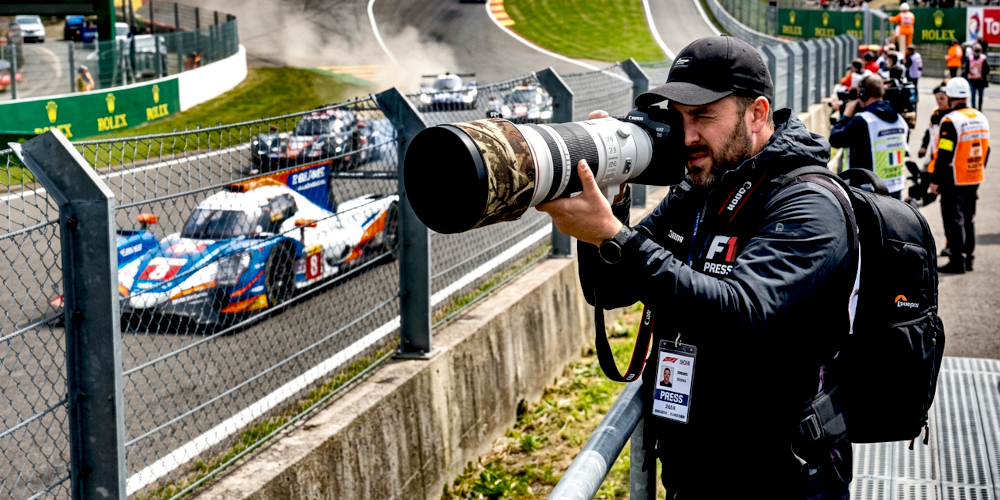
Using a good lens is critical because the lens determines your photo’s sharpness, light-gathering ability, color accuracy, and background blur.
Photographers often say, “Date your camera body, marry your lenses!” because a high-end lens paired with an entry-level camera will outperform a cheap lens on a flagship camera. While camera bodies become outdated every few years, a great lens can last 10–20 years and holds high resale value.
Which One is a Good Lens?
Budget lenses often suffer from spherical aberration (barrel distortion) and cause warped straight lines. Also many budget lenses have chromatic aberration (purple/green outlines around high-contrast edges), ended up lens flare in direct sunlight in the image. Good lenses stay crisp across the entire frame, quality optics correct these flaws physically before light even hits your sensor.
Good lenses feature metal mounts, weather sealing against dust and rain, and superior build quality. Quality lenses open wider (f/1.4 to f/2.8), letting in 4 to 8 times more light than standard kit lenses (f/3.5–5.6). Because more light hits the sensor, you can use faster shutter speeds to freeze motion and lower ISO settings, eliminating grainy digital noise in indoor or night photos.
Good lenses feature more rounded aperture blades and wide openings that melt distracting backgrounds into smooth, pleasing blur, the effect of depth of field and called “bokeh”, making portraits and products pop off the screen. Better lenses house stronger internal motors that lock onto moving subjects (kids, pets, athletes) silently and instantly, even in dim lighting where cheaper lenses “hunt” back and forth.
How Will You Choose Which Lens to Buy?
To choose which lens to buy, audit the photos you have already taken to find your most-used focal length, then buy the highest-quality lens you can afford in that exact range. When buying a lens, prioritize mount compatibility, focal length, and maximum aperture first, as these determine if the lens works on your camera and what photos it can take. Once those match your needs, check the remaining optical and physical specifications to compare models.
Check Your Current Photo Data – If you already own a kit zoom lens (like an 18–55mm or 24–70mm), open your favorite photos on your computer or phone and check the EXIF data (image info). Then look at the zoom millimeter (mm) number you use most often. If you constantly shoot at 50mm, buy a dedicated 50mm prime. If you are always hitting the maximum zoom, you need a telephoto lens.
Choose Between Native and Third-Party Brands – Native Lenses (Canon, Sony, Nikon, Fujifilm, etc.) offer the fastest autofocus, best weather sealing, and guaranteed compatibility, but cost significantly more. Third-Party Lenses (Sigma, Tamron, Viltrox, etc.) often deliver 90–95% of the same image quality at half the price. For most hobbyists and enthusiasts, third-party lenses offer the best value.
Test Before You Commit – If you are looking at an expensive lens, lend from a friend or rent it for a weekend to see if you actually enjoy carrying its weight and using its focal length. If you have a restricted budget you can buy the lens used or refurbished. Lenses hold their value well and last for decades. Buying from reputable used gear dealers can save you 20–40%.
The Final Check List: Buy the Correct Lens
Lens Mount – Must match your camera body’s physical mount (e.g., Sony E, Canon RF, Nikon Z, Fujifilm X). Using a different mount requires an adapter, which can slow down autofocus.
Sensor Coverage (Format) – Check if the lens is designed for Full-Frame or APS-C (Crop). Putting an APS-C lens on a full-frame camera causes heavy dark corners (vignetting) or forces the camera into a lower-resolution crop mode.
Focal Length – Determines your angle of view and magnification (e.g., 16mm is wide, 50mm is natural, 200mm is zoomed-in).
Maximum Aperture (f-number) – Shows how wide the lens opens (e.g., f/1.8, f/2.8). A lower number lets in more light for indoor/night shooting and creates a blurrier background.
Constant vs. Variable Aperture (for zoom lenses) – A constant aperture (e.g., 24–70mm f/2.8) stays at f/2.8 across the entire zoom range. A variable aperture (e.g., 18–55mm f/3.5–5.6) gets darker as you zoom in.
Minimum Focusing Distance and Magnification – Tells you how close you can get to your subject. Crucial if you want to shoot close-up details, food, or macro photography (look for a 1:1 or 0.5x magnification ratio).
Image Stabilization (IS / VR / OSS) – Optical stabilization built into the lens reduces camera shake at slow shutter speeds. This is vital for telephoto lenses or if your camera body lacks in-body stabilization (IBIS).
Autofocus Motor Type – Look for modern linear or stepping motors (labeled STM, USM, VCM, XD Linear, or VXD). Avoid older gear-driven motors if you shoot video or fast-moving subjects, as they are noisy and slow.
Weather Sealing – Rubber gaskets around the mount and buttons protect against dust and light rain. This is essential for outdoor and travel photography.
Filter Thread Size (in mm) – Shown with a Ø symbol (e.g., Ø67mm). If you own ultraviolet filter, neutral density (ND) or polarizing filters, matching this diameter saves you from buying new filters.
Weight and Length – A heavy lens (over 800g) can cause neck fatigue on long trips and feel unbalanced on compact camera bodies.



Be First to Comment